Bacon’s Cryptography and the Anatomy of Self-Deception
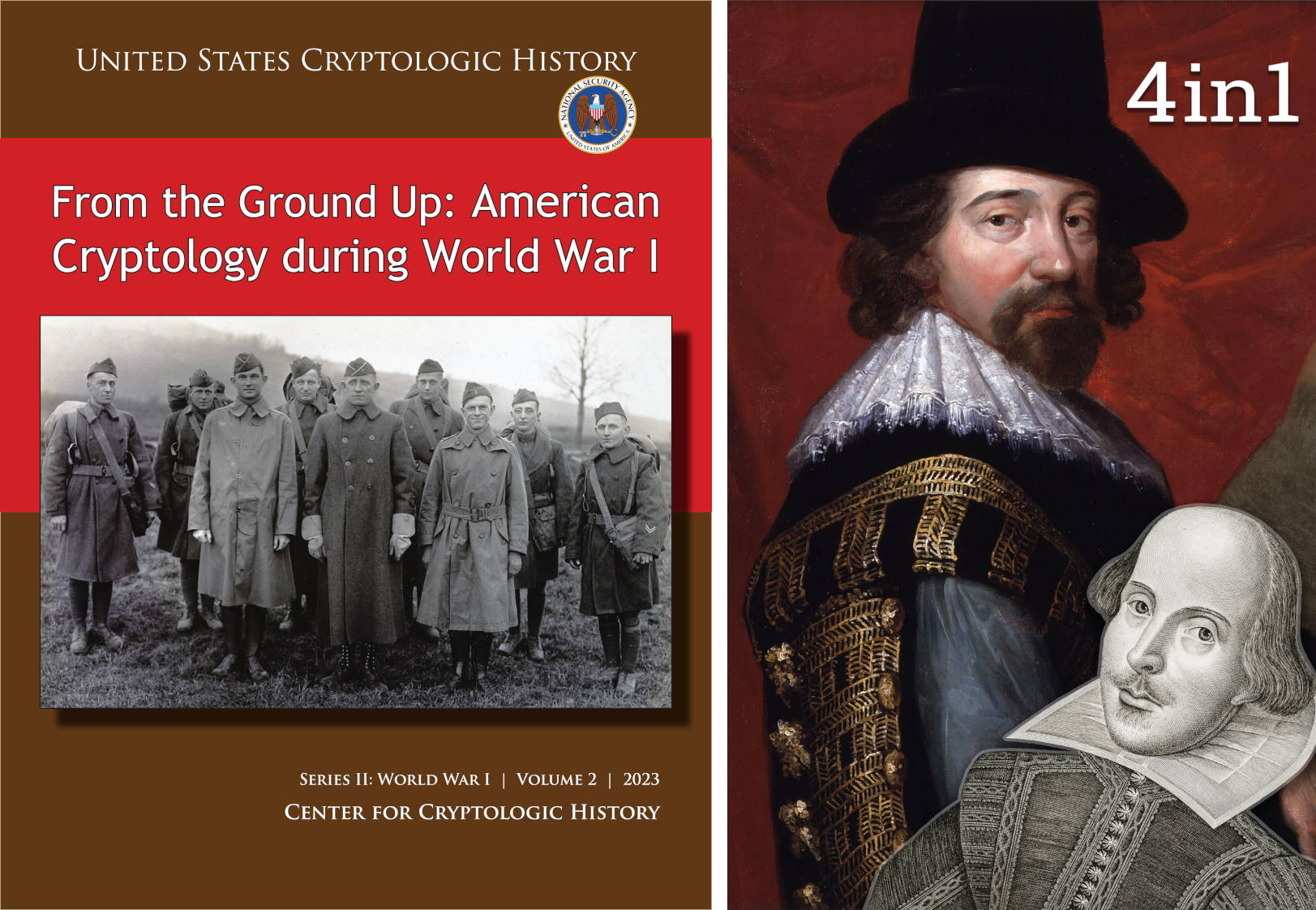
If, over the course of a century, many intelligent and educated people stubbornly reject reliable facts, preferring omission and lies instead, there must be strong reasons for this. However, understanding the reasons for mass self-deception is unlikely without turning to the actual facts.
In other words, one must first stop ignoring them. Evaluate the degree of their credibility. Thoroughly verify all of them, at last. In short, work with facts and documents the way scientists usually do. The situation with Bacon and Shakespeare, however, is unusual precisely because here they don’t do things the way it’s customary in science...
A Series of Non-Random Coincidences
For the entire enlightened world, the year 2023 was notable for the 400th anniversary of Shakespeare’s First Folio [1]. To mark this significant event, new books about the life and work of the Great Bard were published, and older ones were reissued. Shakespearean exhibitions and festivals were held, and thematic publications appeared in newspapers and magazines.
Amid this celebration of global culture, another – completely synchronous – jubilee, the 400th anniversary of Francis Bacon’s De Augmentis Scientiarum [2], went essentially unnoticed. Yet it has long been known that it was in this work that Bacon described in detail his biliteral cipher, through which great secrets were encoded in Shakespeare’s First Folio. Not only the answer to the mystery of the true author of Shakespeare’s works but also the keys to unlocking those hidden pages of the history of England, Europe, and the secret brotherhood of the Rosicrucians, which modern science has practically not explored at all.
In other words, while these things have long been known to some, such knowledge essentially doesn’t exist in serious scientific discourse. Therefore, in the public’s collective consciousness, there is absolutely nothing in common between these two books. Moreover, the fact that they were both published in the same year, 1623, is considered by historians to be a random and meaningless coincidence.
To demonstrate the opposite – the deliberate non-randomness of this coincidence and the close connection between the two books – it’s useful to examine four entirely different events. At first glance, these seem to be four separate and independent events, which happened in different parts of the world in the same year, 2023. However, upon closer examination of these matters, in light of the dual 400th anniversary of this particularly interesting pair of books, one can begin to see that all of this are parts of the same gradual process…
In brief, the four aspects of the overall “process of uncovering the truth” are as follows:
(1) At the beginning of 2023, under the auspices of the Center for Cryptologic History, which operates within the NSA, a specialized intelligence agency of the United States, a substantial monograph titled From the Ground Up [3] was quietly published without any press notification. This work reveals significant reassessments of seemingly well-established facts from the early history of American military cryptology in the early 20th century. [4]
(2) Around the same time in Washington, at the Folger Shakespeare Library, renowned worldwide as the richest collection of Shakespeare’s first editions and other books from the Elizabethan era, quiet changes of a different kind took place as well. First, without explanation, a long-posted text inviting all researchers seeking the true author of Shakespeare’s works to explore the extensive collections of the Folger Library suddenly disappeared from the library’s website [5]. Shortly after that, it became known that the library’s director, Michael Witmore, under whose leadership the invitation was posted, decided to step down from his position, which he had held for the past 12 years. [6]
(3) By mid-2023, news of a major achievement by the new international project DECRYPT spread widely from Europe. Under its auspices, numerous scientists and independent researchers from various countries (not only in Europe but also from other continents), relying on modern computer technologies, have been quite successful at breaking ciphers in historical documents that had remained unread for centuries in the archives and libraries of the world. That year, in particular, DECRYPT analysts managed to discover and decipher a significant collection of encrypted 16th century letters from the secret correspondence of Mary Stuart, Queen of Scots. [7]
(4) The fourth event occurred at the end of 2023, when, thanks to researchers mainly from Russia, a new website, 4in1.ws, appeared on the internet. It contains an extensive collection of investigations, documents, and evidence demonstrating not only the deep connections between points (1), (2), and (3), but also how closely and intriguingly these events intersect with the mysteries of Bacon and Shakespeare. [8]
Perhaps the most remarkable aspect here is that all the key investigations in point (4) were conducted before events 1, 2 and 3. And were published, respectively, before 2023, but only in Russian. So the 4in1.ws project began distributing and further developing these findings in English.
Since all these materials – the original investigative book 4in1, the series of subsequent new analytical works, and the large collection of documents underlying the investigations – are freely available for review and study on the website 4in1.ws, this article will only provide a brief overview of what has been gathered there. Most importantly, it’ll highlight how radically these facts and documents alter the established historical narrative in academia, provided they are not ignored but thoroughly studied and verified.
The NSA and the New Fathers of Cryptology
Why is the book and project called “4in1”? The full and more descriptive title of this interdisciplinary endeavor is “4in1: Mask of Shakespeare and Mysteries of Bacon, Book by Cartier and Secrets of the NSA.” The stages of this research were published online in Russian starting in the fall of 2020, and in their completed form, they were published as a book in May 2022.
About six months later, in January 2023, under the auspices of the NSA and its Center for Cryptologic History, another substantial book, From the Ground Up [3], was released. Although seemingly focused on an entirely different topic – the development of American cryptology during World War I – this work, surprisingly, directly touches on all the main themes of 4in1. That is, it also includes some material on Shakespeare, a bit about Francis Bacon, the French cryptographer General Cartier, and the intriguing role of Baconian ciphers in the early history of the NSA.
What’s most important is that in this new book by NSA historian Betsy R. Smoot, even the well-known facts and events from the Bacon-Shakespeare line are now presented quite differently from the way virtually all historians have been doing for the past sixty years or so. Starting with the David Kahn’s foundational work The Codebreakers [9], which is now revered as “the bible” for historians of cryptography.
What does “quite different” mean here, and why is it important?
In almost any work on the history of cryptology where the unusual circumstances surrounding the remarkable rise of the Friedmans – the most famous stars of American cryptology in the 20th century – are mentioned, the story is typically presented in a similar way [10]. And looks like this.
George Fabyan, an eccentric millionaire who made his fortune in the textile industry, came across the works by certain Elizabeth Gallup in the early 1900s. Gallup claimed to have deciphered secret messages from Francis Bacon, allegedly hidden using a special cipher in numerous old books from the Elizabethan era. Impressed by these discoveries, Fabyan invited Gallup to his Riverbank estate near Chicago, where he created a Cipher Department within his personal scientific laboratories to further develop her work.
Soon after, in 1915-1916, the energetic Fabyan began recruiting young, educated individuals to assist Gallup in her work. This is how geneticist William Friedman and philologist Elizebeth Smith came to work at the Cipher Department of the Riverbank Laboratories. The two soon married and, later in their government service, became the most famous cryptographer couple and brightest stars in American cryptology. After William Friedman’s death in 1969, he was not only hailed as the “father of scientific cryptology” but, at times – largely due to Kahn’s influence – as “the world’s greatest cryptologist.”
However, as David Kahn, who personally interacted with the cryptographer couple, revealed to readers (and subsequent cryptology historians repeated), the Friedmans quickly realized the illusory nature of the entire venture involving the decipherment of secret Bacon’s messages while working for Fabyan at Riverbank. For they did not find any ciphers there at all. Decades later, in the 1950s, they authored a scathing book titled The Shakespearean Ciphers Examined [11]. In this book, Fabyan is portrayed as a wealthy eccentric with no understanding of cryptography, Elizabeth Gallup as a woman deeply lost in her own fantasies, and the complete absence of encrypted messages in old books is asserted with such strong terms:
“We are certain that Mrs Gallup had not found, in all the books she examined, one application of the bilateral cipher. […] As cryptologists we regret being unable to find that it had been used [in the books of Bacon-Shakespearean era]…”
It’s precisely in this manner, we should emphasize, that the fruitless analyses of Bacon’s cipher at Riverbank have always been recounted in all books on the history of cryptology. Not to mention studies in Shakespearean scholarship.
Up until today, the quoted conclusion of famous cryptologists remains the primary and most powerful argument for literary scholars in debates about Baconian ciphers in Shakespeare’s works.
However, the recent book by the NSA historian From the Ground Up offers a solid foundation for reconstructing a significantly different version of these same events.
First, it should be noted that Fabyan’s own pre-war Cipher Department is now described as a “thriving cryptanalytic enterprise.” Which is far more logical and closer to the truth, because previously, it remained entirely unclear and mysterious how Fabyan’s cryptographers (who worked exclusively on Baconian ciphers in old books) were able to immediately provide the U.S. government with successful decryption of intercepted enemy communications once the U.S. entered the war. Moreover, these same Riverbank cryptographers, at Fabyan’s initiative, trained nearly a hundred military officers in codebreaking, as the U.S. Army had no cryptanalysts of its own at the time.
Second, the names of the cryptographer couple, the Friedmans, who are naturally mentioned repeatedly in From the Ground Up, are nowhere associated with the topic of Shakespeare and Baconian ciphers in this book.
Third, contrary to longstanding historical tradition, William Friedman is never once referred to in the new monograph as the “father of American cryptology.” Now they have found a completely different character for the role of the father – Colonel Parker Hitt [12].
And fourth, if one reads the text more carefully, it becomes clear that the officers of young U.S. cryptographic intelligence who fought in Europe, upon the end of World War I referred to the French General François Cartier as their “father.” [13]
For our story, this General, who headed the Cryptographic Department of the French General Staff during the war, holds particular significance. After his military service, in the 1920s and 1930s, François Cartier, encouraged directly by Fabyan, became deeply involved in researching Gallup’s decipherments and the entire theme of Baconian ciphers in old books. The result of this work was Cartier’s monograph Un problème de Cryptographie et d’Histoire (“The Problem of Cryptography and History”) [14], where the main conclusion of this authoritative professional cryptologist is as follows:
“We believe it is necessary to emphasize that from a cryptographic point of view, we have personally conducted a review of a certain number of texts [deciphered by Mrs. Gallup] and we consider that the discussion should set aside the cryptographic perspective, which seems unassailable to us.” [15]
It’s probably not difficult to realize that when two highly authoritative professional cryptographers, who helped establish cryptology as a true science and a branch of applied mathematics, differ so radically in their views and assessments, both cannot be right. Given that deliberate deception has always been, and remains, one of the primary tools in espionage and cryptographic affairs, one of these professionals is almost certainly telling an intentional untruth.
The entire body of documents gathered so far – both declassified from NSA archives and uncovered from previously unexamined library collections – clearly indicates that it’s William F. Friedman and his wife, Elizebeth Smith Friedman, who are deliberately lying in this case.
This is precisely why, in the new version of cryptology history from the NSA, the names of Friedmans are now completely separated from debates about Bacon as Shakespeare. As a result, neither the demonstrably deceptive book by the Friedmans nor Cartier’s work – both of which fundamentally diverge in their assessments of the Bacon-Shakespeare issue – are mentioned at all in the monograph From the Ground Up.
To better understand the reasons why the NSA has now chosen to completely separate its history from this significant deception, first, it makes sense to turn to the history of the Folger Library and its longstanding, highly intricate connections with U.S. intelligence cryptologists.
The Folger Library and the Cartier’s Book
The text mentioned earlier, which was posted on the Folger Shakespeare Library’s website inviting those seeking the true author of Shakespeare’s plays, read as follows [16]:
“The Folger has been a major location for research into the authorship question, and welcomes scholars looking for new evidence that sheds light on the plays' origins. How this particular man—or anyone, for that matter—could have produced such an astounding body of work is one of the great mysteries.
If the current consensus on the authorship of the plays and poems is ever overturned, it will be because new and extraordinary evidence is discovered. The Folger Shakespeare Library is the most likely place for such an unlikely discovery.”
Why this text about “new and extraordinary evidence” was posted on the website when Michael Witmore became the director in 2011, and then quietly disappeared in 2023, just a few months before Witmore announced his resignation, remains, of course, unexplained by anyone.
However, in the history of the Folger Library it’s well-documented how closely and intricately the Bacon-Shakespeare authorship debates are intertwined with the obvious interest in these matters from U.S. cryptographic intelligence agencies.
We should begin by noting that the founder of this unique library, millionaire Henry Clay Folger, like George Fabyan, was for many years a staunch supporter of the idea that Bacon was the true author of Shakespeare’s works. This is precisely why Folger actively purchased copies of the First Folio, other first editions of Shakespeare, Bacon’s works published during his lifetime, and other books from the Elizabethan era, hoping to find documentary evidence supporting Bacon’s authorship.
In 1928, a year before his death, Henry Folger wrote a well-known letter (to his British book dealer, Broadbent), in which he stated that he had decided to completely abandon the idea of Bacon being the author of Shakespeare’s works [17]. By a curious coincidence, another millionaire and staunch Baconian, George Fabyan, around the same time, in 1929, also wrote a letter (to Swedish cryptography historian Yves Gyldén), similarly stating that he no longer believed Bacon was the author of Shakespeare’s plays, favoring instead the idea of collaborative authorship by the Rosicrucian brotherhood [18].
The reasons for such a radical and simultaneous shift in perspective by individuals who generously funded their historical research certainly deserve further investigation. Whatever it was, the Folger Library, completed after its founder’s death in the early 1930s and bringing together all of his valuable acquisitions in one place accessible to researchers, immediately became a bastion of the most conservative Shakespeare scholarship. From its earliest years, the library’s leadership firmly held Stratfordian positions, asserting that Shakespeare himself was the true author of the works attributed to him.
At the same time, as has now become known, the topic of Bacon-Shakespeare ciphers also had its own parallel and specific development at the Folger Library, though kept in deep secrecy. In particular, amid the worsening political situation and the looming threat of a new major war in the late 1930s, scholars and Shakespearean experts associated with the Folger Library received secret training as cryptanalysts in a naval communications intelligence group. And after the U.S. entered the war, in 1942-1945 these scholars (Fredson Bowers, Charlton Hinman, Giles Dawson, Ray O. Hummel) have been working on breaking enemy codes in the US Navy’s intelligence unit. [19]
When the war ended, these cryptanalysts returned to their peaceful profession of Shakespearean studies, diligently reinforcing Stratfordian positions in academia. This effort was carried out with exceptional thoroughness and rigor. For instance, when the Shakespeare Quarterly journal was founded in 1950 under the auspices of the Folger Library to comprehensively study all the Shakespearean theme, a strict taboo was imposed from the very beginning on any mention of General Cartier and his controversial book. So for 75 years of the journal’s existence, not only has there been no reference to Cartier’s book, but even his name has never appeared on its pages.
When General Cartier passed away in the summer of 1953 at the venerable age of 90, the Folger Library provided a significant springboard for the launch of the now-famous book by the cryptographer couple, the Friedmans, The Shakespearean Ciphers Examined [11]. Here is how it was arranged, in brief.
Just a few months after Cartier’s death, in the fall of 1953, the Folger Library announced a contest for the best work on the Elizabethan era. Specifically for this contest, Friedman and his wife spent 1954 preparing their extensive exposé manuscript, The Cryptologist Looks at Shakespeare. This work, as it was often said in later times, “drove the final nail in the coffin of Baconian theories.”
Naturally, in the spring of 1955, this manuscript was declared the winner of the Folger Library’s competition, received widespread press coverage and garnered enthusiastic reviews from Shakespeare scholars. A couple of years later, it was published in a shortened version and in a large print run as the book The Shakespearean Ciphers Examined, quickly making the Friedmans cultural celebrities. This happened despite, it must be emphasized, the extremely strict secrecy requirements at the NSA, where at the time all employees were strictly forbidden from revealing their involvement in government cryptology. Why an exception was made for William Friedman in this case has never been explained.
The NSA’s keen interest in the Bacon-Shakespeare topic and the Folger Library did not end with this episode. A particularly striking recent manifestation of this interest was the somewhat peculiar exhibition “Decoding the Renaissance,” held at the Folger Shakespeare Library in late 2014 with direct involvement of the NSA. The main feature of the exhibition was the choice of William Friedman as the central figure, around whose cryptographic talents various Renaissance cipher-related artifacts were gathered and displayed. [20]
Given that Friedman’s only real “contribution” to the study of Renaissance cryptography was his monograph proving that he, as a professional cryptologist, found no Baconian ciphers in old books, the choice of such a central figure for the exhibition seems almost inexplicable. “Almost” here means that there was, of course, an explanation – just one that was never publicly stated.
Because just a few months earlier that same year, 2014, for the first time in British history, a PhD dissertation was successfully defended at Brunel University London on the topic of “Bacon as the author of Shakespeare’s works.” More precisely, the dissertation’s title was: “A linguistic analysis of Francis Bacon’s contribution to three Shakespeare plays: The Comedy of Errors, Love’s Labour’s Lost, and The Tempest.” [21]
Details on what made this dissertation so significant and why it caused noticeable concern at the NSA, leading to an entire exhibition celebrating Friedman at the Folger Library, can be found in the chapter “Bacon and TEMPEST” of the book 4in1.
Here, however, it’s time to move to a brief overview of the research by other scholars in the field of historical cryptology.
DECRYPT, David Kahn, and the Lies by Omissions
Since 2018, various European cities (Uppsala, Amsterdam, Munich, Oxford) have hosted HistoCrypt, an annual international conference on Historical Cryptology that covers all aspects of the use of ciphers (cryptography) and their decryption (cryptanalysis) throughout history.
This conference, by its very nature, is a large interdisciplinary endeavor, as historical cryptology closely intersects with fields such as mathematics and history, computer science and artificial intelligence, linguistics and image processing.
The activities of the large-scale decryption project DECRYPT are regularly and thoroughly covered in HistoCrypt presentations [22], as many of the organizers and key figures of both initiatives are often the same individuals. The successes of these two efforts are undeniable and impressive, with the number of papers and decrypted historical documents growing noticeably. However, there is a very distinct imbalance in this otherwise positive process.
If one undertakes even the simplest statistical count of how often certain particularly interesting authors are mentioned in the conference materials, the following picture emerges. Names like William Friedman and David Kahn (or, for instance, the journal CRYPTOLOGIA as the basic source for cryptography historians) are mentioned in any recent HistoCrypt proceedings roughly thirty times on average each.
In contrast, Baconian ciphers in old books and François Cartier’s monograph Un problème de Cryptographie et d’Histoire, which align perfectly with HistoCrypt’s themes, are never mentioned – not once. Nor is General François Cartier himself.
The reason for this strange omission is, in essence, not difficult to understand.
David Kahn, the patriarch of cryptology historians, never hid the fact that he idolized William Friedman from a young age, calling him the “greatest of cryptologists” and fully accepting the version presented in the Friedmans’ book The Shakespearean Ciphers Examined. As a result, Kahn’s most important and foundational work The Codebreakers (1967) makes no mention of General Cartier’s book, that fundamentally contradicts Friedman’s conclusions.
When CRYPTOLOGIA was founded in 1977 with Kahn’s active participation, quickly becoming the most authoritative journal on the history of cryptography, a tradition – clearly influenced by the patriarch-founder – of never mentioning Cartier’s book was established there as well.
At the turn of the 21st century, David Kahn made an important historical discovery, uncovering previously unknown archive of Riverbank’s Cipher Department in the New York Public Library – a vast collection of documents surrounding Fabyan’s cryptographers’ work on Baconian ciphers. This valuable archive, long believed lost to history, had in fact been quietly stored – donated from a private collection – in the library’s manuscript division since 1960. [23]
Upon careful examination of the documents from this archive, it becomes clear and strikingly evident that almost everything described in the Friedmans’ book about their work with Bacon’s ciphers at Riverbank is either outright falsehood or artfully ambiguous phrasing designed to obscure inconvenient truths. In other words, an entire set of documentary evidence (signed personally by William Friedman and Elizebeth Smith) was uncovered, which completely contradicted the version of cryptology history that David Kahn and his colleagues had been constructing throughout the second half of the 20th century... [24].
The result of this unpleasant discovery was that David Kahn essentially ignored almost all of these documents. For the cryptography historian community, he published an article in CRYPTOLOGIA [25], focusing on only one “valuable find”: the draft of Friedman’s famous work The Index of Coincidence. Which is, undoubtedly, the most outstanding of all Friedman’s cryptanalytic works, prepared in 1920, during his final year working for Fabyan at Riverbank.
4in1: The Return of Cartier’s Book
Why and how this happens, no science can explain, but in the same year of 2020 (exactly one hundred years after the Friedmans fled from Riverbank to Washington), two crucial events in our story took place independently of each other, in different corners of the world.
At first glance, these events seem entirely unrelated. However, upon closer and more combined examination, it becomes clear that they are different facets of the same picture. A significantly new historical picture that radically changes our understanding of what really happened with cryptology throughout the 20th century. And how important is the role that Francis Bacon's ciphers play in these changes.
(Not to mention that, in their potential and development, these ongoing changes are capable of leading researchers to fundamentally new perspectives on many other areas of science as well.)
So, what are we talking about?
The first event was the simultaneous publications [26] by journalists from the United States, Germany, and Switzerland, who obtained a so-called secret “MINERVA report.” This report detailed the greatest spy operation or “the most successful intelligence heist of the 20th century” [27] which lasted over half a century, starting in the mid-1950s. It revealed how U.S. and West German intelligence recruited Boris Hagelin, owner of the Swiss company Crypto AG, whose cipher machines were sold to almost 130 countries worldwide. These machines were designed with deliberately weakened cryptographic systems, allowing American and German spies to quickly and easily decrypt the communications secured by these devices.
The second event, which occurred in Russia, was the resurfacing of the long-forgotten book by French General Cartier, Un problème de Cryptographie et d’Histoire [14]. Since this book ended up in the hands of an IT journalist who, in the previous century, had spent about twenty years professionally engaged in cryptanalysis and OSINT (open-source intelligence) for one of Russia’s intelligence services, this unexpected discovery led to the launch of the major research project 4in1.ws.
To understand the close connection between events (1) and (2), it’s enough to point out that the key figure in the espionage operation RUBICON (main theme of the MINERVA report) was none other than William F. Friedman. He played a crucial role twice – first as the “access agent” (and a long-time friend of Boris Hagelin from pre-war era) and later as the intelligence “recruiting officer” (holding an official title of Special Assistant to the Director of the NSA).
What’s particularly noteworthy is that William Friedman orchestrated the complete compromise of the cipher machines of the Swiss company Crypto AG (codename MINERVA) during the very same years, 1954-1957, when he and his wife were preparing their book The Shakespearean Ciphers Examined. Thanks to this book, not only was Cartier’s work Un problème de Cryptographie et d’Histoire almost entirely erased from history, but so was the General himself – a fact anyone can verify by attempting to find any substantial information online about this remarkable man and his cryptographic achievements.
Even these facts are enough to begin understanding why, after 2020, NSA historians urgently started looking for a new “father of American cryptology” to replace William F. Friedman, who had long been considered firmly established in that role. In the context of the Hagelin cipher machines scandal, continuing to proclaim such a cunning spy – who helped deceive the world and read the secret correspondence of more than 100 countries for over half a century – as the father of national cryptology seemed far too provocative...
Moreover, by stripping Friedman of his “father” status and duly recognizing the contributions of General Cartier, NSA historians made a clear distinction between the undeniable cryptologic achievements of the Friedmans and their more unsavory efforts to discredit the late Cartier and their involvement in the Bacon-Shakespeare cipher controversy. As a result, in-depth research on this subject now seems to have naturally concentrated in the “4in1” project, as no other cryptology historians dare to delve into this sensitive and subversive topic.
In the course of these investigations, a large number of facts and documents have been uncovered regarding the lesser-known aspects of the Friedmans’ multifaceted activities. So the theme of lies and betrayals naturally became dominant.
In particular, among the “4in1” investigations, one can find documents showing how a young William Friedman at Riverbank prepared numerous visual aids and wrote instructional brochures to help beginners master the reading of Bacon’s cipher in old books using Gallup’s method [28]. Meanwhile, a young Elizebeth Smith (not yet Friedman), relying on these materials, neatly cracked Baconian ciphers while working as Mrs. Gallup’s assistant [29]. (David Kahn found all these documents in the archives of the NYPL [23], but for well-known reasons, chose to withhold them from his fellow historians – effectively committing a scientific betrayal of the truth.)
Other documents have been gathered that show how, in 1925, William F. Friedman committed his first serious act of betrayal. Under pressure from his former boss, Fabyan, Friedman met with the Japanese ambassador in Washington and revealed not only that American cryptanalysts were effortlessly reading Japan’s secret communications, but also how Japanese diplomats could prevent this. (Moreover, the non-trivial reasons that pushed Friedman to take such an unusual step can be fairly well reconstructed. However, all professional cryptology historians prefer to ignore this episode as it severely tarnishes “the greatest of cryptologists.”) [30]
There are also documents showing how, during the 1940s and 1950s, Friedman, in fact, repeatedly betrayed his colleagues in codebreaking units in pursuit of favor from high-ranking officials during investigations into the causes for the U.S. fleet’s defeat at Pearl Harbor. [31]
Finally, documents have been gathered regarding the personal circumstances that led Friedman and his wife to write their deceptive monograph about the ciphers in Shakespearean-era books. These reveal, for instance, how their work served as a form of revenge against both Fabyan and General Cartier, whom the Friedmans (and, following their lead, David Kahn) blamed for stealing the authorship of W.F. Friedman’s famous cryptanalytic achievement, The Index of Coincidence. [32]
But the main outcome of the “4in1” investigations is, of course, not the exposure of the unpleasant truths about the Friedmans. It’s the uncovering of the historical truth about Bacon, which General Cartier persistently pointed to and unsuccessfully tried to bring to the attention of the scholarly world. The Friedmans, as can be seen, seriously hindered these efforts.
Now that the lies of the Friedmans and their motives are becoming clearer, cryptology and history researchers are left with only one detailed book on Bacon’s ciphers, written by an unquestionably authoritative cryptographer. Additionally, there is the “4in1” project, which comprehensively demonstrates why Cartier’s analytical conclusions deserve trust, while the conclusions of the Friedmans are deliberately constructed disinformation.
Bacon’s Mysteries, Rosicrucian Science, and Folger’s “Extraordinary Evidence”
In light of the new circumstances – where the Friedmans’ book can no longer serve as a credible argument in the debates over cryptographic evidence pointing to Bacon as the author of Shakespeare’s works – it is natural for the scientific community to return to the artificially suppressed but unquestionably authoritative testimony of General Cartier.
Moreover, now that the historical cryptology community has developed and successfully applied powerful computational tools, such as automatic cryptanalysis programs and neural networks, there are ample opportunities to thoroughly verify and more accurately decode all the astonishing information collected in Cartier’s revived book.
This information includes secret details about Bacon’s biography, such as his identity as the secret son of Queen Elizabeth and the Earl of Leicester, his shattered youthful hopes for the throne, his complex relationship with his younger brother and the Queen’s favorite, the Earl of Essex, and why Bacon was compelled to conceal his literary works not only under the mask of Shakespeare but also, at times, under the names of other prominent authors: Spenser, Marlowe, Greene, and Peele.
All these remarkable documents, it should be emphasized, are not new, as they have already been published twice before. First by Elizabeth Gallup at the turn of the 19th and 20th centuries, and then by General Cartier, who received the materials from Fabyan, selectively double-checked some of the fragments, provided an expert opinion confirming the accuracy of the decipherments, and published the corresponding analytical results in the 1920s and 1930s.
A crucial element of this still far-from-complete story is that, for some unnamed reasons, Elizabeth Gallup did not publish everything. Colonel Fabyan, who possessed these deciphered but unpublished materials, likewise, for reasons that remain unclear today, didn’t provide them to Cartier.
In other words, a significant portion of Bacon’s secret biography remains unknown to this day. Virtually everything he encrypted about his life and activities after 1603 is missing – that is, over the span of more than twenty years following the death of Queen Elizabeth.
On the other hand, there is ample documentary evidence that Colonel Fabyan, in his Riverbank laboratories, was passionately engaged in recreating the unusual experiments with nature that the Rosicrucians secretly conducted and that Bacon described in his encrypted messages. [33]
As far as is known, absolutely none of these descriptions, deciphered by Elizabeth Gallup, were ever published anywhere. In essence, they have been lost to history once again. However, both Gallup’s publications and Cartier’s book provide sufficient information about where exactly – within which old books – these missing fragments should be sought.
In light of these additional details, the previously quoted text from the Folger Library about the “new and extraordinary evidence” in the books from their unique collection takes on a significantly new meaning. Likewise, there is much to ponder in the farewell words of the library’s former director, Michael Witmore, who left his position with this message to the new director: “[The Folger Shakespeare Library] is a place that is full of wonders and even greater potential.” [6]
Based on General Cartier’s testimony and the long list – spanning many dozens – of old books where Elizabeth Gallup identified Bacon’s biliteral cipher, the Folger Library has long held a vast collection of encrypted and yet unexplored historical documents. It’s generally known where to search for them and how to extract them. However, no one in the historical cryptology community has yet taken any action in this area – neither with the Folger collection nor with similar books in many other libraries around the world.
Modern cryptanalysis technologies, based on deep neural networks, combined with the body of reliable facts and an enormous amount of supporting documentary materials, make it entirely possible to begin the truly scientific reconstruction of a much more accurate historical narrative.
However, for this to happen, researchers and scholars must first make the decision to abandon their long-held self-deception.
Sources and Citations
[1] Mr. William Shakespeare’s Comedies, Histories, & Tragedies. London: Blount and Jaggard, 1623
[2] Francis Bacon. De Dignitate & Augmentis Scientiarum. London: John Haviland, 1623
[3] Betsy Rohaly Smoot. From the Ground Up: American Cryptology during World War I. Ft. George G. Meade, MD: National Security Agency, Center for Cryptologic History, 2023
[4] idb. History Science as an Art of Cutting Out. 4in1.ws, 2023
[5] idb. Undermining the authorities’ credibility and Shakespeare as “Our Everything”. 4in1.ws, 2023
[6] Folger Shakespeare Library director to step down by next summer. By Sophia Nguyen. The Washington Post, June 28, 2023
[7] George Lasry, Norbert Biermann & Satoshi Tomokiyo. Deciphering Mary Stuart’s lost letters from 1578-1584. Cryptologia, Volume 47, 2023 — Issue 2, pages 101-202; См. также: idb, Новый золотой век дешифрования (и при чём здесь Шекспир), 2023
[8] idb & friends. 4in1: Mask of Shakespeare and Mysteries of Bacon, Book by Cartier and Secrets of the NSA. 2023
[9] David Kahn. The Codebreakers. The Story of secret writing. New York: Macmillan publishing, 1967
[10] Craig Bauer (CRYPTOLOGIA Editor-in-Chief). Secret History: The Story of Cryptology, 2nd edition, 2021. Boca Raton, FL: CRC Press, page 133:
The Friedmans ... both worked for Riverbank Laboratories, run by eccentric millionaire George Fabyan, in Geneva, Illinois, just outside Chicago. The research areas included acoustics, chemistry, cryptology (only with the aim of glorifying Bacon as the author of those famous plays—Gallup worked there), and genetics.
David Sherman (NSA veteran and historian). Sources and methods for cryptologic history: the William and Elizebeth Smith Friedman collections, Cryptologia (2020), 44(3):267-279
William, having been recruited from his graduate studies in agriculture at Cornell University, joined Fabyan’s Riverbank Laboratories in 1915 and established its genetics program. Elizebeth came to Riverbank a year later ... She was assigned to a Riverbank effort that aimed to find enciphered messages thought (wrongly) to have been embedded in the texts of William Shakespeare’s plays. Elizebeth soon became disillusioned with her work. William, however, was drawn into it through his talent with a camera, which allowed him to photograph for Fabyan those pages in early editions of Shakespeare’s works that were deemed (again, wrongly) to contain examples of encrypted text. He and Elizebeth also drew closer together. The two married in May 1917.
[11] W. Friedman, and E. Friedman. The Shakespearean ciphers examined: An analysis of cryptographic systems used as evidence that some author other than William Shakespeare wrote the plays commonly attributed to him. Cambridge, UK: Cambridge University Press, 1957
[12] Betsy Rohaly Smoot. Parker Hitt: The Father of American Military Cryptology. Lexington: The University Press of Kentucky, 2022
[13] In a postwar letter to Cartier, Frank Moorman [the head of G2A6, American Radio Intelligence Section in France] proclaimed “we have considered you the father of our section and have never hesitated to appeal to you in difficulty. You have always been ready to help us and be able to overcome the obstacles, and without you our service would have lost a lot of value...” Quoted in [3], page 177
[14] François Cartier. Un problème de Cryptographie et d’Histoire. Paris: Editions du Mercure de France, 1938
[15] “Nous croyons devoir insister sur le fait qu’au point de vue cryptographique, nous avons personnellement procédé à un travail de contrôle d’un certain nombre de textes et que nous considérons que la discussion doit laisser de côté le point de vue cryptographique qui nous semble inattaquable.” See [14], page 53
[16] See the metamorphoses of “Shakespeare FAQ” web-page (with the help of the Wayback Machine):
- Version from 2011 Oct 8: No invitation yet
- Version from 2011 Nov 7: The appearance of an invitation
- Version from 2023 Feb 3: Still there
- Version from 2023 Mar 7: Total disappearance
[17] Stephen H. Grant (2014). Collecting Shakespeare: The Story of Henry and Emily Folger. JHU Press. Page 78.
[18] Rose Mary Sheldon (2014). The Friedman Collection: An Analytical Guide. See Item 350: Letter [by Fabyan] to Yves Gylden from Riverbank Labs saying they didn’t believe Bacon wrote Shakespeare. See also [11], page 208; and John W. Kopec (1997). The Sabines at Riverbank, page 179.
[19] Alan Galey. Networks of Deep Impression: Shakespeare and the History of Information. Shakespeare Quarterly, Volume 61 No 3 (Shakespeare and New Media, Fall 2010). Page 297:
The rational world of code represented by the Friedmans was also the one occupied by Bowers and Hinman during their years as cryptanalysts for the U.S. Navy from 1942 to 1945. ... Even prior to the United States’s entry into the war, Bowers had received secret instruction as a cryptanalyst in a naval communications intelligence group at the University of Virginia; during the war, he supervised a naval communications group working on Japanese ciphers. Whatever the reason, Bowers’s group was heavy with Shakespeareans, with Hinman a member, along with two other experts from the Folger Library staff (Giles Dawson and Ray O. Hummel). See also: G. Thomas Tanselle, The Life and Work of Fredson Bowers. Studies in Bibliography 46 (1993): 1–154, esp. 32–34
[20] Decoding the Renaissance. Exhibition at the Folger Shakespeare Library. Nov 11, 2014 – Feb 26, 2015
[21] Clarke, Barry R. A linguist analysis of Francis Bacon’s contribution to three Shakespeare plays: The Comedy of Errors, Love’s Labour’s Lost, and The Tempest. PhD thesis. Brunel University, 2014
[22] The International Conference on Historical Cryptology: the official website HistoCrypt; Proceedings of the HistoCrypt see here.
[23] Bacon cipher collection, Manuscripts and Archives Division, The New York Public Library.
[24] idb. Bacon, Shakespeare, and the NSA's 'Cut the Ends!' Reflex. 4in1.ws, 2023
[25] David Kahn (2002): A Riverbank Trove, Cryptologia, 26(3):161–164
[26] The intelligence coup of the century: For decades, the CIA read the encrypted communications of allies and adversaries. By Greg Miller. The Washington Post, 11 February 2020
[27] M. Dobson, J. Dymydiuk, and S. Mainwaring (09 Nov 2020). Operation Rubicon: the most successful intelligence heist of the 20th century. Knowledge Centre, University of Warwick.
[28] idb & friends. “4in1” (2023), chapter “The New Document”; Riverbank Company (1916). Fundamental principles of the Baconian ciphers, and application to books of the sixteenth and seventeenth centuries; Twelve lessons in the fundamental principles of the Baconian ciphers; and applications to books of the sixteenth and seventeenth centuries. Riverbank Laboratories, 1916
[29] Elizebeth Smith Friedman, early decipherments at Riverbank (1916-06). New York Public Library Manuscripts & Archives Division
[30] idb. Aristotle at the Trojan War and “Traitor Founders” in the NSA Hall of Honor. 4in1.ws, 2023
[31] idb & friends. “4in1” (2023), chapter “Concealing the Truth”
[32] idb & friends. “4in1” (2023), chapter “The problem of Shakespearean authorship as an OSINT task”
[33] idb & friends. “4in1” (2023), chapter “Bacon, Rosicrucians and Levitation”. See also “The Secret Science of Riverbank” (2024)