General François Cartier, or Wikipedia Plus …
Cryptographer François Cartier is such a unique figure from the first half of the 20th century that historians spent the latter half trying to forget about him. As a clear result, in the 21st century, practically no information about this person exists among the millions of articles on Wikipedia — in any language on the planet.
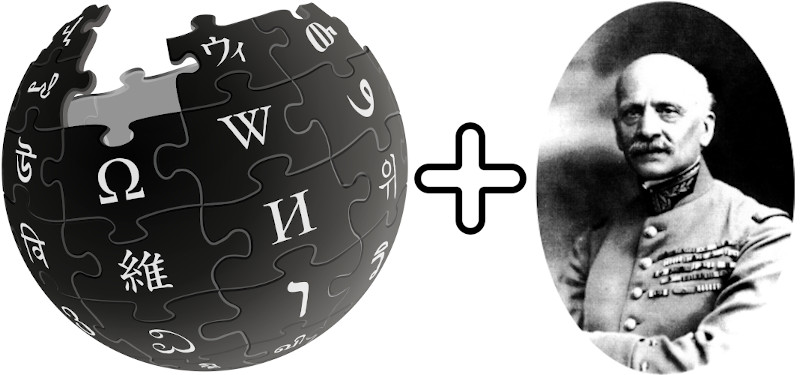
In the last month of the year, the popular online encyclopedia published — following an established tradition — the List of English Wikipedia's most popular Articles of 2024. They started the publication with the following eloquent introduction [1]:
When people want to learn about our world — the good, bad, weird, and wild alike — they turn to Wikipedia.
Wikipedia is the largest knowledge resource ever assembled in the history of the world. Its content is a reflection of all the people who live on our planet — its story is your story, your interests, your questions, and your curiosity...
Here, however, we will talk not about Wikipedia's "most popular" articles, but about the "interesting and curious in history" that is absent from encyclopedias and has never been there.
The current lack of information about François Cartier on Wikipedia is not only a symptom of large "memory holes" as a peculiar malady of humanity. But also a kind of signal indicating where and what can be treated here. And in the process of treatment, simultaneously revealing where this illness comes from and how to strengthen immunity against such afflictions.
In other words, here begins another new cycle of internet investigations. Now as a careful search, collection, and publication of reliable but persistently silenced information in such volumes that it's already possible to create full-fledged articles in the standard format of the people's encyclopedia. That is, not only a substantial wiki article about François Cartier but also about our other "memory holes". Of which there are quite a few. But fortunately, this is quite manageable.
In the narrative about any person who left a noticeable mark in the history of cryptography, it is traditionally customary to refer one way or another to the highly substantial work The Codebreakers by David Kahn [2], now deservedly revered as one of the leading patriarchs among historians of cryptology.
In investigating the strange and mystically enigmatic situation surrounding the outstanding cryptographer François Cartier, references and quotes from the book The Codebreakers will of course be there as well. But a little later. For it is better to start not from this. But from the story of how a very young boy, David K., became fascinated with the subject of ciphers and their decryption.
"Secret and Urgent": From Fletcher Pratt to David Kahn
In an old interview from the late 1970s [3], when he had already well established himself as an authoritative researcher of cryptology with his bestselling book The Codebreakers, David Kahn shared, among other things, this story — about the birth of his fervent childhood passion that stretched across his life:
When Kahn was 12, he was walking past the public library in Great Neck, L.I., and "stopped in my tracks when I saw this book about codes with this terrific title, 'Secret and Urgent.' It hooked me — and I never grew up."
The author of that captivating book — Secret and Urgent: The Story of Codes and Ciphers [4] — was an extraordinarily prolific journalist and writer, Fletcher Pratt. He was famed not only for a multitude of works on military-historical topics but also as one of the pioneers of American science fiction. The specific book of interest to us, Secret and Urgent, published in 1939, according to knowledgeable experts, was practically the only English-language work of that era that told readers, in a popular and engaging form, about the rich history of cryptography as well as practical methods for breaking ciphers (cryptanalysis).
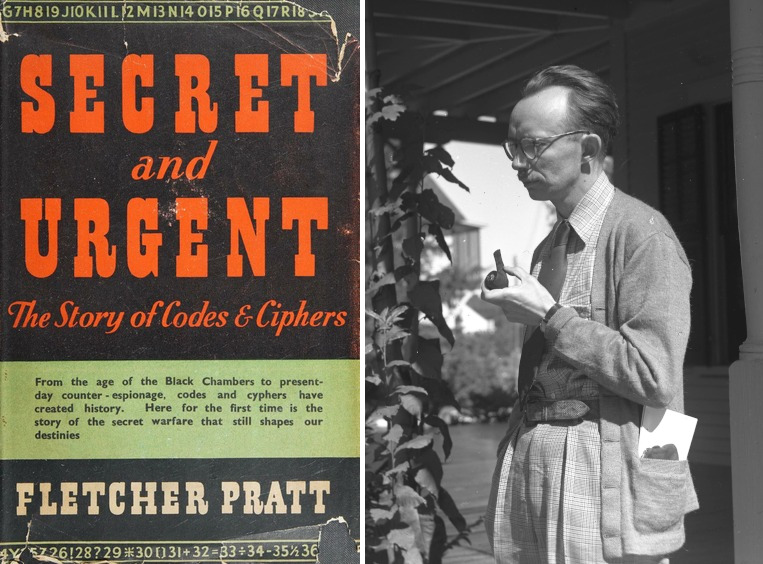
In Pratt's book about the history of codes, ciphers, and their breaking, our main character, cryptographer General Cartier, is also naturally mentioned. In the context of World War I battles, in the chapter "The War of Cryptographers" (page 234):
More than any other in history the war that began in 1914 was a cryptographers' conflict. From the day in August of 1914 when German-controlled radio stations all over the world flashed out the message A SON IS BORN, code-phrase for "War," no great event but was preceded by feverish activity in the code rooms of the nations; and in many cases victory or defeat was underwritten in those code-rooms before it took place on the battlefield or across the seas.
At Mons the II and IV German Reserve Corps did not get their orders in time to make a movement von Kluck had astutely planned and the British escaped a trap that had been set for them without being crushed. At Guise, six days later, von Kluck failed to understand orders that came through for him and the French 5th Army slipped from another trap; and meanwhile the French cryptographers, headed by General Cartier and Colonel Givierge, had broken down the German ciphers.
The fact that François Cartier and his closest associate Marcel Givierge in 1914 did not hold such high military ranks at the time (this would come later in the post-war years) is, in essence, not so important here. What is important is that two particularly competent specialists, leading the cryptographic protection of communications and deciphering operations in the largest war, couldn't be left out in a book about the history of cryptography.
Also significant is that another large (fifth) chapter in Fletcher Pratt's work was titled "Bacon or Shakespeare?" and was practically entirely dedicated, as might be guessed, to the role of ciphers and cryptanalysis in the debate over proving that Francis Bacon was the true author of Shakespeare's works.
The book by Fletcher Pratt likely didn't coincidentally come out simultaneously in the US and the UK in 1939 because the year before, in 1938, in France, General François Cartier published his study Un problème de Cryptographie et d'Histoire ("The Problem of Cryptography and History"). [5]. Approaching with the experience of a seasoned cryptographic practitioner, he scrupulously analyzes this hotly debated question and makes a very clear conclusion that numerous encrypted messages in printed books from the 16th-17th centuries definitively point to Bacon as the author of all texts historically attributed to Shakespeare.
Glib journalist Pratt, who had absolutely no professional experience in cryptanalysis but took a clear and defined skeptical stance in his book Secret and Urgent, didn't dare to dispute with the renowned general professional. Instead, he did something else.
In the initial chapters, after discussing the first known ciphers known to historians, including, of course, the frequently mentioned Caesar cipher from Ancient Rome, the author presents the chapter on Bacon and Shakespeare's cryptography in a rather peculiar way. Carefully avoiding any mention of Cartier and his comprehensive book, Pratt ironically relays an interesting "fact" to readers on the very first pages of the chapter (p. 84):
Baconism, the theory that Lord Verulam [Bacon] wrote the Shakespearean plays, is a wine of comparatively recent vintage. The earliest suggestion that this might be the case was made in Horace Walpole's Historic Doubts, a series of essays in which the author also demonstrates that Julius Caesar never existed.
In a modern 2021 book on the history of cryptology by the authoritative researcher Craig Bauer, who went to the trouble of checking Pratt's sources, there's the following comment on this account (p. 130):
Contrarians [of Baconism] who seek out Historic Doubts will be disappointed, as neither claim is actually present. It would be interesting to know how Pratt made this error.
When David Kahn prepared his major and most famous work The Codebreakers for publication in 1966, he mentioned in the preface to this monumental tome, over 1000 pages long, the fatefully influential book by Pratt. But without childish enthusiasm at all (p. X):
The only other book-length attempt to survey the history of cryptology, the late Fletcher Pratt's Secret and Urgent, published in 1939, suffers from a severe case of this special pleading [journalistic one-sidedness, artificially presenting the book's subject as the most crucial factor in human history]. Pratt writes thrillingly, but his failure to consider the other factors, together with his errors and omissions, his false generalizations based on no evidence, and his unfortunate predilection for inventing facts vitiate his work as any kind of a history. Finding this out was disillusioning, for it was this book, borrowed from the Great Neck Library, that interested me in cryptology.
It is useful and instructive to quote this excerpt from Kahn's introductory words to his outstanding work for the following reason. Unlike the superficial and flamboyantly embellishing Pratt, the author of The Codebreakers clearly tried to make his book as a thorough academic historian, not as a journalist (which he indeed was at that time). Yet, specifically in those sections of his book that discuss Cartier and the Bacon-Shakespeare debates, David Kahn followed the very same recipes that so disappointed him in Fletcher Pratt's book.
In other words, in these sections of The Codebreakers, one can find all the journalistic sins mentioned: the refusal to consider other historical factors, omissions, false generalizations, and even, alas, the invention of facts that did not actually exist...
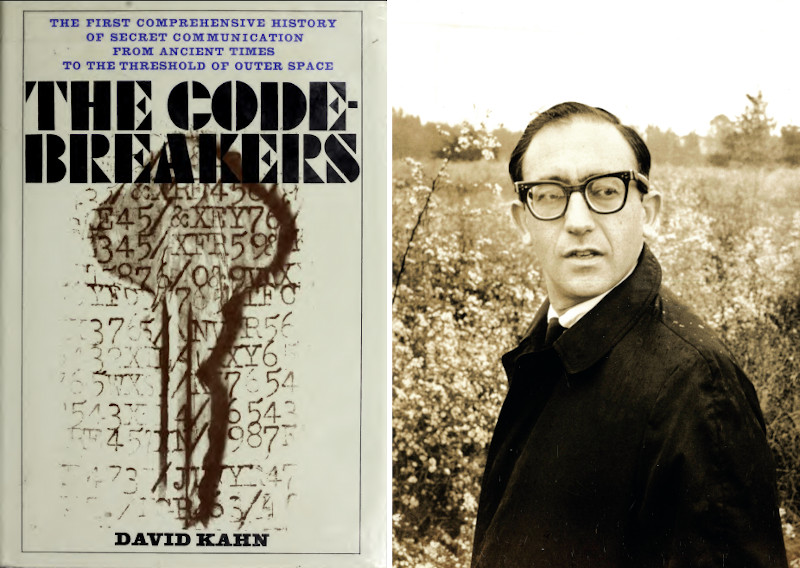
To summarize briefly, in David Kahn's book – just like in Pratt's – the story of the outstanding cryptologist François Cartier is completely separated from the topic of Bacon-Shakespeare's ciphers. This topic is extensively criticized and mocked in a special chapter "Pathology of Cryptology" because, in the author's conviction, it is entirely fabricated by hopeless fantasists and naive dilettantes. Hence, General Cartier's book Un problème de Cryptographie et d'Histoire is not mentioned in a single word on the pages of The Codebreakers. Like Pratt, David Kahn pretends that this work simply doesn't exist.
Our story, however, is dedicated not to omissions and facts distortion, but to the personality and deeds of General Cartier. It will therefore be useful to quote what is said about him in The Codebreakers. Now revered as the "Bible of Cryptology Historians," this book reports not only verified truth about our hero but also, unfortunately, documentable falsehood...
Truth and Lies on the Pages of "The Codebreakers"
It is more correct to start extensive quotations from Kahn with the truthful information ([2], p. 348):
The First World War marks the great turning point in the history of cryptology. Before, it was a small field; afterwards, it was big. Before, it was a science in its youth; afterwards, it had matured. The direct cause of this development was the enormous increase in radio communications.
This heavy traffic meant that probably the richest source of intelligence flowed in these easily accessible channels. AH that was necessary was to crack the protective sheath. As cryptanalysis repeatedly demonstrated its abilities and worth, it rose from an auxilary to a primary source of information about the foe; its advocates spoke regularly in the councils of war. Its new status was exemplified in terms clear to every military mind when both Cartier and Givierge became generals. The emergence of cryptanalysis as a permanent major element of intelligence was the most striking characteristic of cryptology's new maturity.
It was natural to consider France as the most illustrative example of how the role of cryptology grew in military-political affairs for one simple reason. In the early days of the war, France was actually the only country where army cryptographers already had a functioning structure not only for protecting their communication channels but also for reading enemy communications. This was primarily due to the extensive early efforts of François Cartier as part of the special Cryptographic Commission ([2], p. 262):
The Military Cryptography Commission, which consisted of approximately ten officers chosen from among all arms who had shown an aptitude for cryptanalysis, tested systems proposed for use by the Army and studied cipher systems used by other nations, particularly Germany.
The commission's president was, in 1900, the inspector-general of the military telegraph services, General Francois Penel, and in that year a 37-year-old engineer, a graduate of the Ecole Polytechnique, was attached to the general staff as adjutant to Penel and secretary to the commission.
This was Captain Frangois Cartier, who was to become the chief of the French mihtary cryptologic bureau in World War I.
Before that war, Cartier had drafted a memorandum on how to solve German Army cryptograms on the basis of the drill messages, prefixed ubchi, that French radio stations had intercepted during German maneuvers.
The commission obtained other information from spies, deserters, and recruits to the Foreign Legion. The members, who did their cryptologic work in their spare time and received extra pay for it, formed a core of cryptologists with valuable experience. All this gave France a preponderant cryptologic superiority in 1914.
(pages 299-300):
On the Western Front, [to the new conditions of war due to the emergence of radio communication] only France was ready. Her prewar activities, more extensive and better conceived than those of any other nation, had prepared her. Posts that had intercepted German radiograms in peace simply continued to do so in war. The cipher system approved by the Commission on Military Cryptography went into effect.
The cryptologic section set up by Cartier at the War Ministry was quickly fleshed out with mobilized personnel. His assistant, Major Marcel Givierge, arrived alone at general headquarters to set up a cryptologic section — and a week later had six assistants working round the clock.
A line of six direction-finding stations extended behind the entire front. All these stations were connected by direct wire to the War Ministry at 14 Rue Saint-Dominique in Paris, where Colonel Cartier's office stood next to the telegraph central. The French thus received German radiograms as quickly as the legitimate recipients. During the course of the war, Cartier estimated, they intercepted more than 100,000,000 words, or enough to make a library of a thousand average-sized novels.
(page 305):
[By the end of the war,] Cartier's office now headed the first echeloned organization in the history of cryptology. The Bureau du Chiffre, which had returned to the War Ministry building in Paris, employed several dozen people, of whom only about 10 were cryptanalysts.
It worked in the cryptologic stratosphere — inter-Allied communications, enemy diplomatic and naval cryptograms, new military systems, and messages from distant fronts. Its chief, Cartier, also directed the intercept service.
Under the Bureau du Chiffre was G.H.Q.'s Service du Chiffre, headed by Givierge. Its staff of 15 officers handled the cryptographic correspondence of the French headquarters and solved the strategic cryptograms of the German Army, usually with methods and keys supplied by the Paris bureau.
Everything quoted here about Cartier and his close associate Givierge are facts cross-referenced in various sources. Equally undeniable is the following remarkable fact.
There are quite informative biographical articles about General Givierge in Wikipedia — in the French and German sections of the encyclopedia, at least. But there's absolutely nothing about General Cartier. Not separate articles, not even mentions of Cartier in articles about Givierge…
Why is this?
In the "Bible of Cryptography Historians" by David Kahn, one would not find an answer to this question. But one could find there obvious falsehoods — sticky and well-entrenched in history — about General Cartier when the narrative of cipher development and cracking methods moves to the post-war period.
For, during this period, one of the main figures in The Codebreakers becomes the eminent American cryptologist William Friedman, whom David Kahn idolized from his early youth and continued to venerate throughout his long life. In his works, from the first cryptographic books to the last [7], he consistently named Friedman "the greatest cryptologist in the world."
Whether this is true or not is highly debatable and won't be discussed here. Simply because the hero of our story is not this person. However, it happened that Friedman, early in his substantial cryptographic career, developed a strong antipathy towards General Cartier due to some international misunderstanding. Of which Cartier himself couldn't possibly have known, especially initially. Nevertheless, with direct instigation from David Kahn, an ugly lie emerged, repeated by all historians to this day.
William Friedman's entry into the high spheres of government cryptology, as known, stemmed from the private Riverbank Laboratories of millionaire Fabyan. Friedman worked there very productively from 1915 to the end of 1920, but all his cryptanalytical publications were printed by Fabyan, as the owner of the establishment, in his private press and automatically became the property of his Laboratories. This, of course, didn't please the ambitious Friedman, but he was too poor and young to seriously protest.
It was from this conflict situation that a large cryptographic misunderstanding eventually arose — a misunderstanding about which David Kahn writes in his book as follows ([2], page 376, with the essence of the falsehood bolded):
Riverbank Pamphlet No. 22, written by Friedman in 1920, must be considered the most important among separate cryptology publications. Titled "The Index of Coincidence and Its Applications in Cryptography", this pamphlet provided such a machine for new cryptanalysis methods that it pushed cryptology as a science into a new world. In 1922, to save money, Fabyan decided to print this pamphlet in France. Where it was seen by General Cartier, who valued it so highly that he ensured its immediate translation and publication, even placing a false date "1921" on it, to make it appear as if this French work was the first to come out!
It's easy to confirm that this portrayal of history is untruthful by examining the documents of that time. The French publication of the pamphlet, indeed released first in 1921 by the Paris publishing house Fournier on Cartier's initiative, clearly states it is Riverbank Publication No. 22: L'Indice de coincidence et ses applications en Cryptographie, Riverbank Publications, No. 22, Paris: L. Fournier, 1921.
Moreover, in the same year, 1921, François Cartier published an article in a popular magazine in which he talked about his extensive correspondence with the American Colonel Fabyan, head of the Riverbank Laboratories, and about the genuinely quality cryptanalytical work being done by Fabyan's staff: Cartier, François (Général), "Un problème de Cryptographie et d'histoire," Mercure de France; Paris: 1921, 1 Dec 1921.
Following this article by Cartier soon in the same Mercure de France, came many more of his publications — in 1922 and 1923 — which were also about materials received from the US by General Cartier from Fabyan. In 1938, drawing on all these publications, François Cartier would release a comprehensive book [5], entirely dedicated to the "Problem of Cryptography and History" posed for historians by many encrypted texts by Francis Bacon, discovered and decrypted in old books of the Elizabethan era.
With this genuinely significant problem, however, historians decided, almost immediately and quite unanimously, to address it in a very simple way — by totally ignoring Cartier's book and all his other cryptanalytical publications on Bacon-Shakespeare themes.
That's exactly what Fletcher Pratt did back in 1939, and David Kahn did the same. Since Kahn clearly didn't want to discuss the extensive correspondence between Fabyan and Cartier, let alone the general-cryptographer's book, he invented a clumsy story about "saving on printing the brochure in France." He included this in his book not only in 1966 when he was preparing the first version of The Codebreakers for publication, but also thirty years later in 1996, when the revised and updated edition of his famed work was released. All parts relating to Bacon-Shakespeare and the falsehoods about Cartier were left unchanged by the author.
This peculiar "taboo on Cartier's book," under the guise of a sticky lie accusing the general of trying to steal authorship from the "world's greatest cryptologist" Friedman, has been consistently perpetuated in publications by cryptography historians to this day [8][9][10][11].
Various details of this large and unseemly story, however, have been discussed in previous investigations already on multiple occasions. Therefore, it's time to move on to the biographical facts about Cartier, for which information is almost entirely absent from publicly accessible internet sources. But with persistent searching, it is still possible to find and assemble it bit by bit...
Further Reading
General Cartier, "The Problem of Cryptography and History" (2020)
The Problem of Shakespeare's Authorship as an OSINT Task (2022)
Bacon, Shakespeare, and the NSA's 'Cut the Ends!' Reflex (2023)
The Secret Science of Riverbank (2024)
Main Sources
[1] Announcing English Wikipedia's most popular articles of 2024. By Wikimedia Foundation, 3 December 2024
[2] David Kahn. The Codebreakers: The story of Secret Writing. New York, Macmillan Company, 1967
[3] The Secret Life of David Kahn: Uncovering Spies and Secret Codes From the Age of 12 He's Been Hooked on Spies and Codes. By Myra MacPherson. The Washington Post, June 8, 1978
[4] Fletcher Pratt. Secret and Urgent: the Story of Codes and Ciphers. Indianapolis: Bobbs-Merrill, 1939
[5] François Cartier. Un problème de Cryptographie et d'Histoire. Paris: Editions du Mercure de France, 1938
[6] Craig P. Bauer. Secret History: The Story of Cryptology. Second edition. CRC Press, 2021
[7] David Kahn. How I Discovered World War II's Greatest Spy and Other Stories of Intelligence and Code. CRC Press, 2014
[8] David Kahn (2002): A Riverbank Trove, Cryptologia, 26(3):161–164
[9] Chris Christensen (2013): Review of "Memories of My Work at the Cipher Bureau of the General Staff Second Department 1930–1945" by Marian Rejewski, Cryptologia, 37:2, 167-174
[10] David Sherman (2017): The National Security Agency and the William F. Friedman Collection, Cryptologia, 41(3):195-238
[11] Shawn Rosenheim. The Cryptographic Imagination: Secret Writing from Edgar Poe to the Internet. Johns Hopkins University Press, 2019